Frequency Evolution of Pulsar Emission with the UBB Receiver
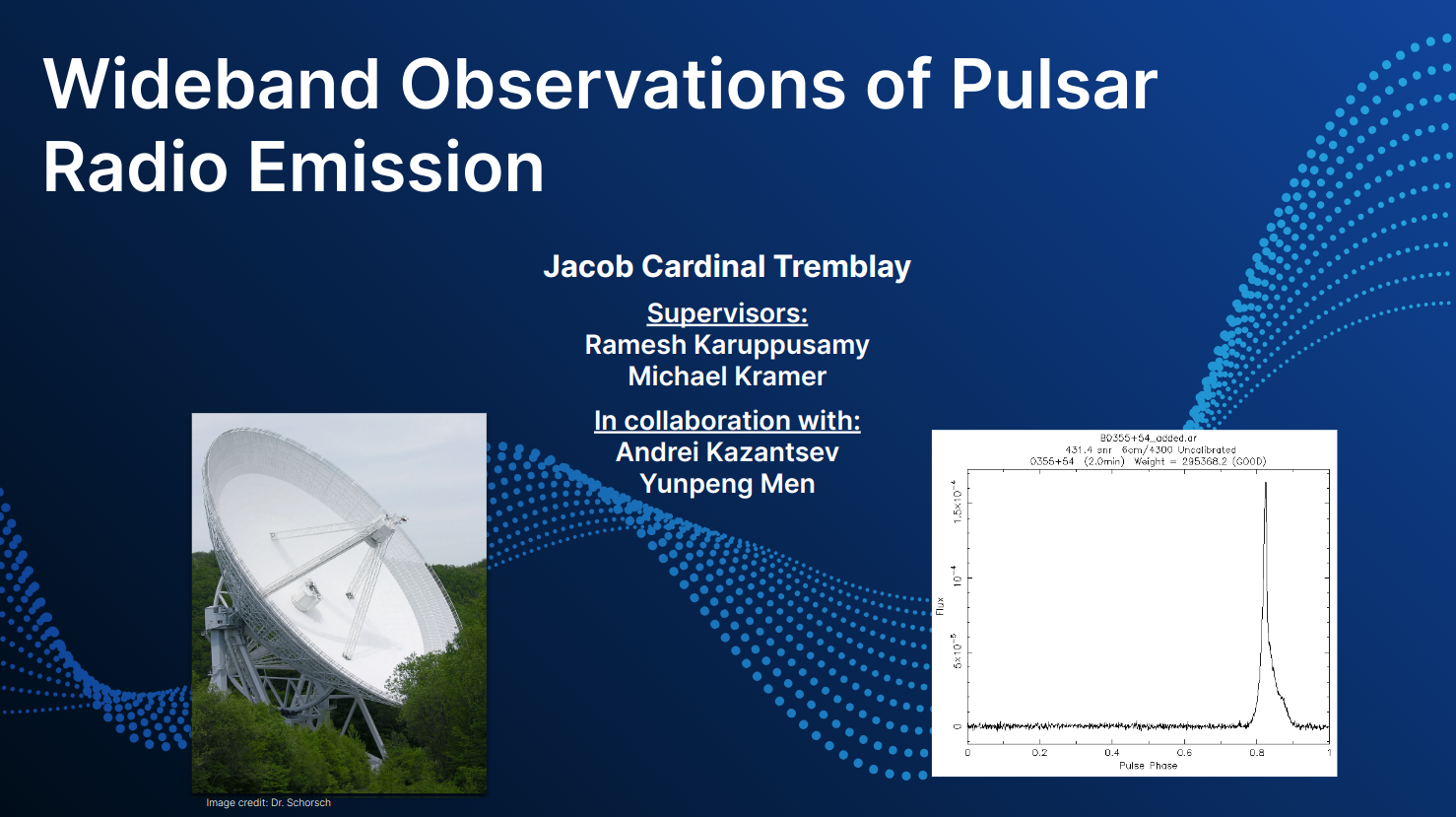
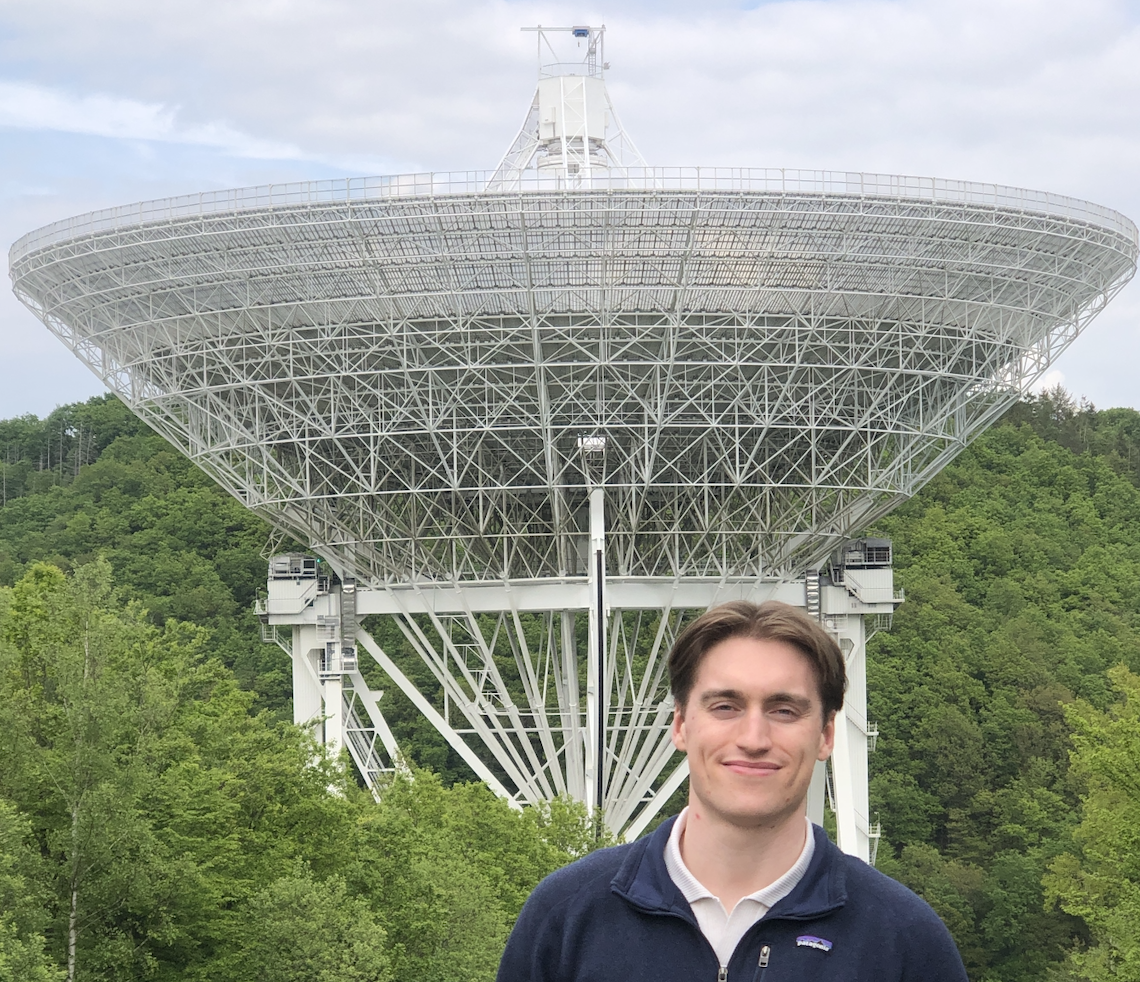
My Master's thesis at the Max Planck Institute for Radio Astronomy used the Effelsberg 100-m telescope's ultra-broadband receiver to study how pulsar radio emission evolves with frequency.
Overview
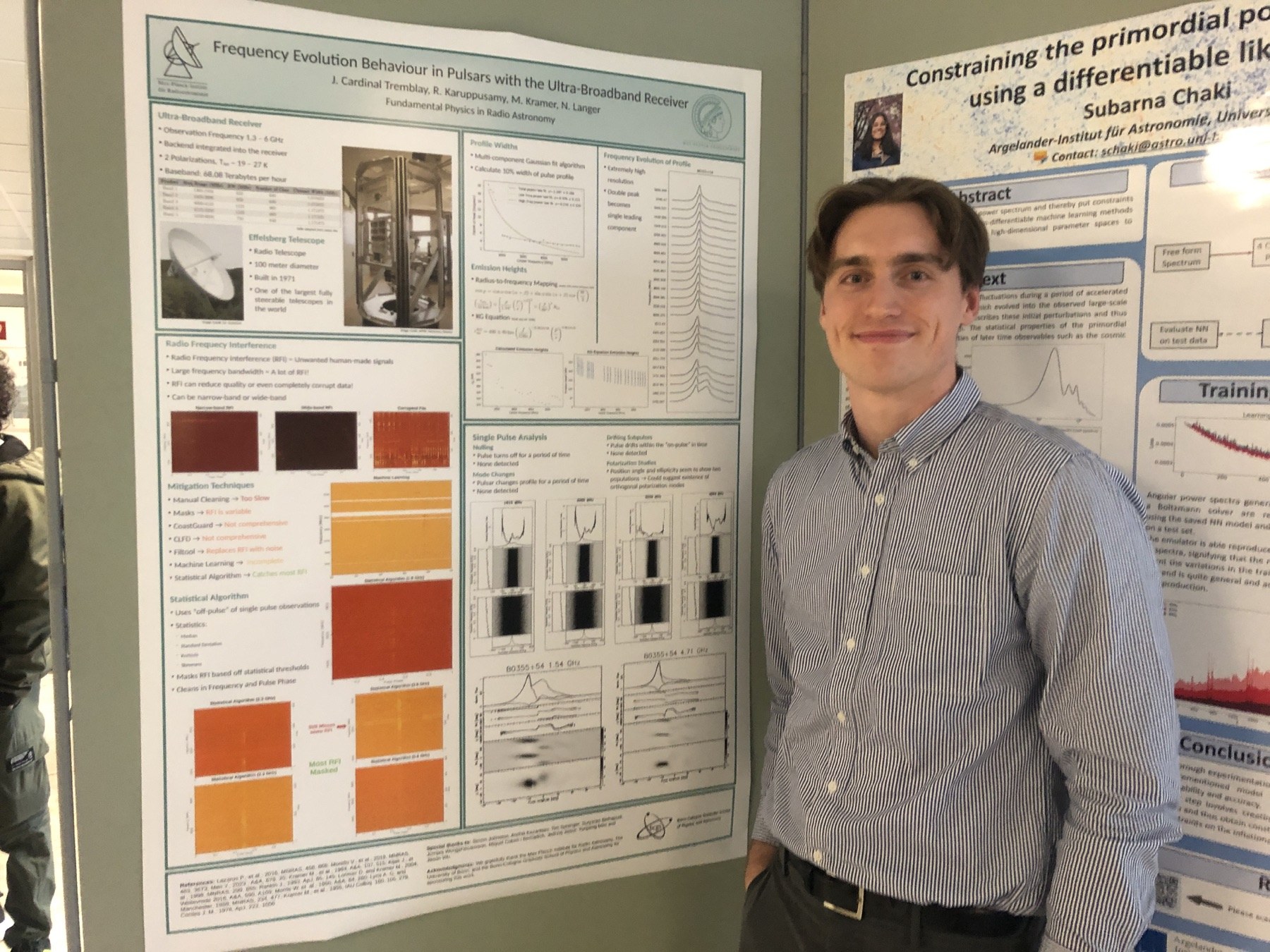
The ultra-broadband receiver spans several gigahertz, providing a wide view of pulsar emission in a single observing system. That bandwidth also introduces substantial radio-frequency interference (RFI), so a major part of the project involved statistical signal processing to identify and mitigate contaminated data.
Alongside this processing work, I manually cleaned part of the data to conduct preliminary studies of pulsar emission physics. A consistent model of radio emission must account for phenomena including mode changing, nulling, and pulse-profile evolution. Observing these behaviours across a broad frequency range gives a useful way to test how they are connected.
Project resource
The presentation below was given in the compact-objects session at the 2023 Annual Meeting of the German Astronomical Society in Berlin.